Monday, 2 September 2019

CRISPR Geo-Politics: A race to become global CRISPR superpower

CRISPR Geo-Politics: A race to become global CRISPR superpower


A code is what defines everything; a code is a combination of some characters which makes up a series of rules and regulations and constitutes a system, and a system is what that’s  necessary for the ongoing and creation of every aspect of nature. A code consists of all the hidden traits inside it and manages the working of a system. Binary code system is among the most common and basics code of computer, a simple combination of 0 and 1 which interprets chunks of data, analyzes it and prepare the corresponding responses ensuring the accurate working of a computer system and who ever can manipulate these code it is pretty much easy to say that he can manipulate the entire computer system. In a similar manner to the combination of 0 and 1 a related kind of code exists in every single living organism a combination of four letters (four nucleotide basis) namely A,T,G and C which defines the every aspect of life in different manners. These massive long chains of Letters (the nucleotides) code on for some specific bio-molecules in living beings and imparts the specific traits to each one of us and contributes to our unique identities. These sequences are all present inside the DNA of every living being, all that unique information encoded in our genome and in a similar manner to the manipulation of binary codes and controlling the entire computer system if one can also be finally enable to manipulate the genetic letter code present inside the DNA one can easily manipulate various life forms and decide their future prospect.

During the twentieth century in the middle of chaos and all the military face-off in the battle fields a secondary battle was going on behind closed doors inside secured research labs and facilities around the world when every major country was involved in a series of experimentation focused on altering, manipulating and mastering the genetics of human being most of such experimentation failed to produce results and with continuous failure and collapsing geo-political systems such researches were ultimately abandoned. One can easily take out from this that these researchers were limited and bounded by the technology of their time should they have been living in today’s world the outcome of all these research experiments would have been quite different, by the early twenty first century biological sciences have made some tremendous progress and the introduction of the gene editing technology the CRISPR is probably the biggest achievement of the century till now.

In simple words CRISPR  is a gene editing technology which enables the alteration of a large number of genes at once with high success ratio and quick results. But this is the scientific side of this tech and it has a more aggressive, intense, and dark side in form of geo-politics and power gaining strategies. The easy gene manipulation trait which is the simplest application of this tech is also the most deadly one as it is now finally possible to create desired alterations in genetic materials in real time the genetic code can finally be manipulated and whoever controls this manipulation of genetic materials, will master the control of manipulating various life forms and ultimately gain a massive control over the world (nature and every aspect of existence).

The Big Guns CHINA vs USA:

Like all the other ongoing battles and face off the two biggest competitors in CRISPR tech are none other than USA and China. The USA alongside its other western allies can very much be titled as the inventors of the CRISPR tech, but since its introduction in 2012 as a gene editing tool the Chinese are the one to understand the values and potential of this tech above all. Although a recent estimation by research watch groups labels the USA still being the overall leader in the total number of effective publications and the patents filed but the Chinese are closing the gap at an exponential rate. Presently the USA leads with nearly 3000 high rated papers in comparison to the Chinese who sits at number 2 with almost 2100 papers in addition the USA have highest number of patents 872 versus the China which sits at number two with 858 patents filed.

A part from this the experts around the world expect that China will easily outclass the US in a while where some believe the Chinese have already beaten the US in this ground. Many experts believe the thing that makes China way better is the close interaction and partnership between the Government and Private sector and the level of commitment for the gene editing research by the state. In a short period of time the Chinese have conducted successful gene editing experiments on various kinds of life forms including plants, Dogs, fungus and even humans. On one side where the western countries are dealing with legal and ethical issues of applying gene editing to for mainstream animal and human editing the Chinese are showing no signs of slow down as the world was shocked by the announcement of First ever birth of a genetically edited human. Though it trigged an ethical debate and questions about involvement of the government being tabled one cannot simply deny the fact that they achieved something that no one could have before this. The Chinese are also making significant progress with application of gene editing in plants for disease management and yield enhancements. According to recent estimation at least 20 big major research groups are working across China using gene editing techniques in plants and the state has injected a massive $10 billion in to the agriculture research sector which is a big step a head in China’s effort to feed it’s massive 1.4 billion population. In response to China’s aggressive approach the US is making its own move a recent project by the US DOD focuses on using gene editing technologies on insects to sustain certain genetically edited viruses which when injected in to plants will enable to resist the stress conditions. The two major powers are making prominent progress but who will be able to cash the best out of it is still a long debate particularly with the entrance of new players in the game.

Russia’s Move:

One of the key developments in recent time is the changing mindset of Russia the Russian’s were significantly anti-GMO type but they have made some prominent changes in their setup recently the Russian Government has announced to invest $1.7 Billion in to gene editing research for agriculture purpose. Dr. Alexey Kochetov Director of institute of cytology and genetics, Russian Academy of Sciences has praised this announcement from the government saying the genetic research in Russia has seen very slow growth for the past decade due to small investments from the government but this announcement is encouraging specially under the current conditions and will help the Russian scientists to match up with their counterparts from rest of the world. Also a group of Russian scientists announced their proposed plan of applying gene editing on human germline, which is a major step a head.
Russian President visiting research fields


Set-Back for the “EUROPE”:

Europe has enjoyed great prosperity in almost every major field of life but a recent decision by the Continents top most court has delivered a huge blow to the efforts of European Scientific Community. The court decision place the gene edited crops under same regulations to the GMO’s which  was a huge upset for the scientific community which insist the court must review its decision as the technology enables quick effective results and unlike GMO’s do not pose any imminent threat as no foreign DNA is being added in. the European research community is in total dismay and believes if not dealt quickly Europe will be in a huge deficit in the field of science.

The new Players in the Game:

Followed by the massive interest from the global powers other countries have also entered the play countries like Japan and Australia have indicated towards possible legislation to enable the use of gene editing freely and possible introduction of such products in consumer market. In recent developments the New Zealand government also announced to invest in gene eliding related experiments.

Conclusion:

What initially began simply as a scientific venture has now turned in to a global phenomenon, the technology has its positive aspects with introduction of high yielding crops, treatment of diseases, and environmental issues but it also has its dark side as this very tech could also be used for dark purposes like bio-terrorism and creation of super soldiers. This dual nature of the tech is main reason of interest for all major global powers who are now in a race to get the best out of this tech and become a global leader.

Courtesy: SingularityHub, GLP, BBC

Saturday, 18 May 2019

Human Genome Editing: From China to U.S. –What’s next??


Human Genome Editing: From China to U.S. –What’s next??

Ever since the introduction of CRISPR/CAS system to the world it’s conversion and transformation in to a state of the art genome editing tool and its initial success stories, speculations have been made at various stages for the application of this technology on humans initially for the curing and preventing certain genetic disorders but in long terms for the creation of enhanced individuals with better physical and mental capabilities. The very reason for such consideration is because of the secrets wrapped inside our genome all the attributes that are possessed by humans are a resultant of what information is present in the genome, altering and manipulating that information simply means we can alter all attributes and ultimately the very existence of human individuals. Although such experiments are greatly criticized, prohibited and forbidden by governments, humanitarian groups, and scientific communities, such experiments are on a move one way or the other. Various trials are being conducted on small to medium scale in some parts of the world with US and China being the most prominent ones.

Human genome editing in China:
Since the dawn of the 21st century the Chinese began with a promise to be the complete masters and global leaders in science and technology. Like other major technological fields like the artificial intelligence, high speed telecom and sustainable energy systems they adopted a similar approach in case of the novel CRISPR based genome editing technology. The technology turned out to be a feasible and effective one for genetic manipulation for the first time in 2013, the world was still in discussion of whether the tech should be used in human’s case or should be limited to certain plant and animal species alone while the world was still engaged in an argument the Chinese decided step up in this issue. In 2015 the first ever report of using CRISPR gene editing technology in human case came up front, a group of Chinese scientist had reported about their attempts for making mutation corrections in case of beta-thalassemia a heritable blood disorder, while they mentioned how the experiment was conducted and their ultimate goals they also explained how the tech caused multiple off target effects resulting in many off target mutations and rendered the edited embryos non-viable. In the year 2016 a second report came up with Chinese scientists attempting to create viable edits in human embryos for making them HIV resistant by altering a gene called the CCR5 but the edited embryos were not viable to proliferate. Initial attempts in human genome editing field by the Chinese was a proof how far they have come up in this field in comparison to rest of the world  and what achievements are possible once the trial is successful. In the year 2018 there came a time when the Chinese finally succeed; Dr. Hi Jiankui reported the creation/birth of first ever genetically modified humans the use of CRISPR technology for turning off CCR5 gene and preventing off target effects in embryos which enabled it to survive and later develop in to babies. The twins born are to be kept under a designed medical surveillance until they reach the age of 18, with their medical expenditures of all type to be covered up by Dr. Hi’s project. Following this announcement Dr. Hi met with a massive back lash from local and international authorities and was subjected to numerous investigations.
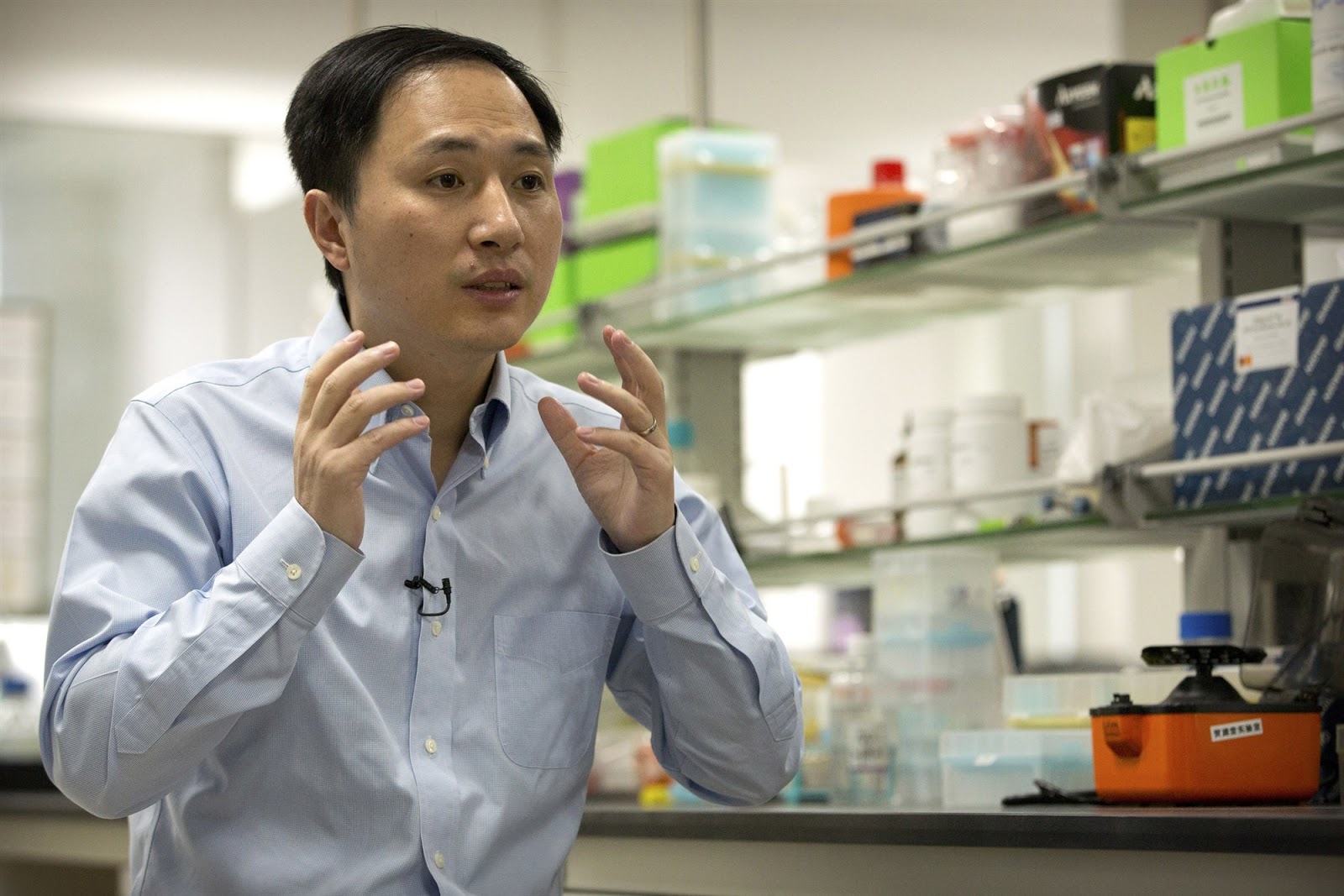
Dr. Hi Jiankui presenting his research at International Summit on Human Genome Editing IN Singapore


Human Genome Editing in Germany:
Germany became the first major Western country to allow the human genome editing clinical trials on a limited scale. A group of multinational biotechnology firms including CRISPR Therapeutics and Vertex pharmaceuticals have enrolled 30 patients in a hospital in Regensburg, the patients will be treated for beta-thalassemia by creating a special single edit which will create a condition called Hereditary Persistence of Fetal Hemoglobin (HPFH) this results in production of fetal haemoglobin which is almost equally effective as normal haemoglobin and the resultant will be a reduction in overall effect of thalassemia.

Human Genome Editing in USA:
The USA in many means the home of CRISPR technology, place where it was created and where it was first used for genetic editing (not in humans), but there were still some hurdles in place, after various legal battles the FDA finally approved use of this tech in human trials on US soil for the first time ever. The first trial for use of CRISPR gene editing on humans was approved for 18 patients and has been applied to 2 patients till now. A group of scientists from the University of Pennsylvania is using CRISPR technology to cure cancer. For this the team is using a combination of CAR-T technique with CRISPR gene editing, in this the researcher are extracting out some of the host immune cells (T-cells) later on creating to edits in the cells; one at a gene called PD-1 which is exploited by cancer cells to put a halt to the immune cells, the second edit is in a receptor molecule used by immune cells for sensing danger and replacing it with a highly specific engineered receptor which will specifically target cancerous or tumour cells. After making the specific edits the cells will be infused back in to patient’s bodies for combating with cancer. The official results of the following trial will be published in detail in near future.
Immune cells specifically targeting cancer cells (Predicted) 


Conclusion:
The world is developing at a rapid pace in both directions positive and negative. To come up with negative part there is a dire need for developing affective defence strategies, in light of this issue genome editing technology could be of immense value but various constrains and specifically the ethical dilemma surrounding this tech is a major issue, and why all this questioning and ethical concerns now?? Where were all these ethicists when a handful of powerful organizations were busy in destroying our environment by exploiting the world in every manner? Question comes here is this really about ethical concerns or to pave a pathway for private sector to commercialize this tech completely and to have complete authority of this tech under so called government approved structures….

See Also:

Tuesday, 23 April 2019

Lab In Snow: Creating Massive Genome Sequences In Glaciers And Ice Caps


Lab In Snow: Creating Massive Genome Sequences In Glaciers And Ice Caps
Courtesy Oxford Nanopore Tech.

To understand more about life and this world, opportunities are hidden in nature, new knowledge presents itself to be taken up for the mankind, new ways to unlock knowledge of life the genomes of living organisms are of key importance. The genome is composed of all the knowledge of life containing all information which can help in revealing many issues of life. For achieving these targets getting sequences of genome is important. Since the completion of Human Genome Project the sequencing techniques have been gradually improved day by day. But one of the major constrains in this journey is the detailed preparation of genomic libraries, transportation of these sample labs from one city to another and in some cases other country or even another continent. These sorts of delays could cost a lot in a longer view; in sort of genomic degradation, delayed results and some time loss of nascent species. In this moment of anxiety the answer came from Oxford University in form of their all new portable nano-pore sequencers “The MinION” (See:https://crisprpedia.blogspot.com/2018/10/minion-ultimate-future-of-genome.html). These sequencers have produced viable results in labs and following initial success the sequencer are now being tested in some extreme conditions. This post is focused on some such beautiful journey of creating massive sequencing in extreme conditions.

Journey to the Ice of Iceland:
Dr. Sarah Johnson from the Georgetown University went on to employ nano-pore sequencers to the remote ice caps of Iceland. She explained her journey to be remarkable, easy, fun, learning and adventurous. She greatly admired the level of easiness provided by the nanopore sequencers as multiple samples from different soils, lakes, and glaciers were collected with the corresponding genomic libraries prepared within a day and ready to be sequenced. They also observed a very negligible level of contamination during genomic library preparation prepared following protocols given by the Oxford Nanopore and using corresponding DNA kits. The key benefit of nanopore sequence was its swiftness and rapid result output with first results available in approx 30 mins. Dr. Sarah Johnson and her team greatly admired the minion sequencer and corresponding analysis tools as the enabled covering a large area in small time with a vast variety of samples analysed in a limited time period.
Courtesy Johnson  Biosignatures Labs.


Exploring glacier diversity of Greenland:
Conducting massive sequencing research in remote glaciers is always a great challenge. Dr. Arwyn Edward and his team worked on massive Russell glaciers of Greenland. Ice caps and glaciers command a beautiful diversity of life ready to be explored but often face a serious constrain in from of subzero temperature which makes the overall operation difficult to carried out. Dr. Arwyn and his team hoped to break this stereotype as the conducted massive meta-genomic sequences in Greenland and explored new microbial communities. The operation was carried out using the portable nano-pore sequencers the MinION. Meta-genomic libraries were prepared using corresponding extraction kits and fed to MinION for sequencing. In this way massive metagenomic sequences were carried out in ice glaciers in real time.

Conclusion:
Glaciers and ice caps covers a significant region of earth’s surface with an entire continent made up of ice and large regions in poles covered with ice, these places are usually having extreme weather conditions, subzero temperatures, long dark days, these conditions are un-conducive for human life sustainability so why is it still important for us to explore microbial communities and analyse all this data?? Answer to this question lie in the fact that climate change and rise in global temperatures is causing rapid melt and loss of ice sheets and their addition in mainstream water supply, along with these ice sheets corresponding microbial communities will become a part of water supplies as well. In time metagenomic sequences will help in timely identification of threat either the microbes are harmful or not and what steps should be taken to counter the threat. Recent reports already explains the havoc climate change is bringing with it as the permafrost melt releases some deadly pathogens back in environment after centuries of dormancy, real time sequencing could be helpful for countering this issue as well as real time sequencing will enable in time confirmation and marking geographical distribution pattern of such deadly pathogens and strategies to contain the plague.

Source: Oxford nano-pore, Johnson Biosignatures Lab, Psychropaths

Saturday, 6 April 2019

CRISPR: A Technology Breaking Records

CRISPR: A Technology Breaking Records

The world around us, the world in which we live, the world in which we reside, the world in which we thrive is greatly affected by science and technology. Since the dawn of evolution every scientific discovery has one key objective the betterment of mankind to make life of humans better. The beginning of 21st century came with a promise to be a century of ultimate evolution and scientific marvels and among those marvels is the renowned Genome Editing technology the “CRISPR”. Since its introduction in late 2010’s the tech has completely revolutionized every field of science from bio medicines to pharmaceuticals to agriculture. The technology is a promising tech owing to its great impact and positive results. Apart from the ethical dilemma involving human gene editing one of the key targets that remain insight with this great tech in hand is to manage and find cure for various genetic disorders. This aim just got a new boost as the CRISPR broke another record.

Breaking the Record:
An essential focus with the CRISPR technology is to achieve multiplex editing and dealing with junk DNA. George church a globally renowned geneticist alongside his team previously performed an experiment involving removal of 62 copies of retroviral DNA lurking around the pig genome the target was to remove viral DNA avoid chances of infection by viruses and making smooth transition for pig-human organ transplant possible. This was previously the best results and probably highest number of the edits performed in a single gene editing experiment. A recent effort by the same scientific team headed by Dr. Church and including their associates Oscar Castanon and Cory Smith includes mass scale alteration of genome and its post edit viability estimation. The team have just submitted their findings which states they have successfully altered the genome at 13200 locations and the cell survived after the experiment. One of the major constraints of CRISPR genome editing is to ensure that the experiment is feasible and cell survives, live and able to reproduce after the experiment. In this study the team target a large segment of DNA called the LINE-1—which is a large transposable element able to shift itself along the genome and is reportedly about 17% of the total human genome. The LINE1 has been reported to cause some devastating disease including haemophilia, colon cancer and many more, which indicates a dire need for solution but in the mean time dealing with it is a huge challenge as it consists of such a large portion of our DNA. But despite of all these hurdles the team achieved a milestone they have altered the LINE1 from about 13000 spots with an all new version of the CRISPR/CAS called the base editor and the cell successfully survived in post experimental evaluations.
George Church(Left) Oscar Castanon and Cory Smith (Right)

Prior to this research many renowned scientists across the globe have attempted to deal with the LINE1 using the CRISPR but none was able to find some effective results. For instance in 2016 Dr. Geoff Faulkner from the University of Queensland in Australia worked with CRISPR as he attempted to knock out LINE from about 500 mice embryos but the final results showed none of the embryos could survive mass scale editing. After knowing the results from Dr. Church’s team he himself praised this new approach and said:

“They found a way to do the experiment without causing gross genome-wide instability”
—Dr.Geoff Faulkner

In a closely related study in 2017 another Australian Scientist Dr. Paul Thomas created massive edits in Y chromosome of mice and pushed it out of the frame the results of the study shows great potential for the tech to cure certain genetic disorders like down’s syndrome.

Conclusion:
With every single day passing on human race is facing new and new challenges which is met by an equally high efforts from mankind to deal with these issues. These new results shows how widely can the genome editing be used to cure not one but multiple ailments and its ultimate influence as one of the deciding factors for the better survival of mankind.

Tuesday, 5 March 2019

Human Genome Editing: From Ethics to Approval


Human Genome Editing: From Ethics to Approval

Science always revolves around mankind sometime to discover something new, sometime to resolve an issue, sometime to make things better and sometime to test an innovation but the ultimate goal of all this is the betterment of life. Like all living forms everything that happens inside human body is completely governed by our genetics our genome commands the faith of our body, our system, our life. If everything goes on perfectly at genome level our life moves on smoothly but if there is an error it results in to one or other type of genetic disorder. Many of genetic diseases are a major cause of deaths annually and it also halts the life of many in multiple ways, finding a solution to all these diseases is a dream everyone had and we might just be able to achieve it. One of the possible ways for dealing with these diseases is editing and altering the human genome with the help of latest gene editing tools, i.e: CRISPR/CAS9. Ability to alter genes at will is an achievement which can revolutionize the world in many ways. The human genome editing is one field with in the field of genome editing which often attains negative reviews especially in recent times and there are views about it.

Human Genome Editing:
For years science has been used on multiple occasions bending the nature and reality to human will enabling mankind to achieve the unthinkable which encourages the mankind to explore further beyond imagination. For years the mankind has been making efforts to achieve a new milestone the genetic alteration in living organisms. The all new CRISPR genome editing has been an essential tool in fulfilment of this beautiful dream. The all new technology is being used for manipulation and rewriting the genetic makeup of living entities and manipulation of entire gene pool deciding the fate of future generations. The CRISPR tech has been directly used successfully in case of many organisms except humans. Applying gene editing directly on humans remains a highly debatable topic with some debating in support of this with implications of various benefits including cure of genetic disorders, enhancement of physical and mental capabilities of humans and much more and people opposing the idea discussing about violation of natures idea of creation, off target effects, indicating multiple health issues etc. While all this debate was happening in the world a scientist decided to take the charge and he did the unthinkable. This attempt and ultimate birth of first ever genetically altered humans created an entirely new tide in the ocean of science.

The Ethics:
It’s been almost three months since the Chinese scientist announced the birth of CRISPR genome edited babies. His announcement met with massive criticism both domestically and abroad, followed by a series of bans and interrogations and holds on his further research by the Chinese authorities and a continuous wave of disapproval and anger from international community. The Chinese scientist named He Jiankui secretly performed an experiment of altering CCR5 gene in human embryos which ultimately led to birth of two genetically edited babies (twin baby girls) this alteration in the genes imparted an immunity to AIDS disease in new born girls. Although the experiment was a successful one which also laid a foundation to what can be achieved in the future using this tech in humans and imparting desired qualities to humans, increased speed, agility, strength and endurance somewhat achieving everything and changing fantasy in to reality. This experiment is a reference to the use of gene editing tech successfully in humans. He Jiankui shared basic knowledge of his research with the international community and met with a massive criticism.
Chinese Scientist He Jiankui

The Approval:
On one side He met with a backlash from all around the globe and on the other side many mega corporations are getting continuous approval for the application of gene editing in humans. Many of the cases are:
Earlier some reports regarding use of CRISPR in human medicine by researchers in China were circulating which was later supposedly abandoned.
Last year around early December a few days after Mr. He’s announcement Editas a CRISPR start-up by the five pioneers of the tech and further backed by Pharmaceutical giant allergan, won FDA approval for CRISPR human trials on a rather limited scale.
Another CRISPR Start up Intellia Therapeutics in association with Novartis has recently won approval for the exvivo application of CRISPR gene editing for treating certain cellular disorders.
Another biotech firm the Sangamo Therapeutics reported application of SB-FIX driven from ZFN’s for treatment of haemophilia B in human patients.
Earlier this year an American Scientist from Columbia University has also reported about his efforts of editing human DNA for treatment of certain genetic disorders. However the research he is conducting is claimed to be limited only up to his own lab right now and no where beyond.
But among all this perhaps the biggest news is the most recent direct application of CRISPR/CAS9 gene editing to human patients in Europe and Canada. The trial is being conducted by a joint venture between CRISPR Therapeutics and Vertex Pharmaceuticals for possible treatment of Beta Thalassemia and Sickle Cell disease.

Conclusion:
On one end the world has massively criticized the Chinese scientist’s successful efforts for altering human DNA for the first time, and on the other hands projects funded by governments or large private corporations with millions of dollars investments are receiving good coverage and positive reviews. Which raises the concern is it really about perfecting the application of gene editing for betterment of mankind or perfecting and then controlling it like some sort of commodity and playing monopoly tricks with it???
This tech is definitely a big step forward in history of mankind and efforts should be made for its easy and possible access for all....  

Sunday, 2 December 2018

Human Genome Editing: Road to creation of Metahumans


Human Genome Editing: Road to creation of Metahumans

The term metahumans/super humans is probably more of a mythical term but has now become a regular part of our everyday life and is usually called to describe humans or people with exceptional physical strength and mental capabilities. Scientific world backed by various governments and private organizations have been working for creations of such human beings mainly for military purposes but good results were rarely observed. It seemed to be an impossible thing “The creation of super humans” until now. The recent arrival of CRISPR/CAS9 and its use in various living being with high success rates has revived the hope of creating such super humans—humans which will be immune to multiple genetic disorders, will have exceptional physical strength, high endurance and extremely high IQ level. Experiments have been conducted by various research groups from across the globe with Chinese scientists leading the race. A claim was made by Chinese researchers in 2015 that they have genetically edited human embryo genome to make it resistant to certain genetic disorders but the embryos were not good enough to survive. Until now there has been many ups and downs in use of CRISPR for human gene editing but a recent announcement by a Chinese scientist named “He Jiankui” has completely changed everything.

It’s been an extremely intense week in the world of science after a shocking announcement by the Chinese scientist at the beginning of this week.

The Announcement:
On 26th of November, Just a day before the International Human Genome Editing Summit in Hong Kong, a major announcement was made by He Jiankui of Southern University of Science and Technology, China. Mr. He announced the birth of first ever genetically edited babies;

“The announcement states a long experiment conducted on a number of couples having high probability of transmitting HIV to their children, in order to avoid that gene editing experiment was conducted to destroy CCR5 gene—a gene responsible for creation of a protein doorway for the entrance of HIV in white blood cells. For the purpose sperms were collected and separated from semen followed by in-vitro fertilisation with one sperm per egg to create an embryo then the gene editing tool was added, after one week few cells were isolated from the embryo to check gene editing. A total 11 embryos were used for 6 implants which later resulted in to one successful pregnancy and birth of twins named Nana and Lulu. The health condition of two new born babies will be judged for the next 18 years.”

Mr. He also says that; “he is very proud of his work, and millions of people will benefit from it in near future.”
He Jiankui in his lab
                             
Response from scientific community:
Immediately after the announcement scientists from across the globe started to raise questions and expressed their concerns regarding these human gene editing experiment;

Nobel laureate David Baltimore said: “Proceeding with germ-line editing in this way was “irresponsible”. I think there has been a failure of self-regulation by the scientific community because of the lack of transparency.”

David Liu from Broad Institute said: “How the babies will get benefit from this experiment I see no need for this, they were not at risk of getting infected by HIV on birth.”

Matthew Porteus of Stanford University said: “He’s already at risk of becoming a pariah. Scientists talked about their research plans years in advance with many colleagues, to get feedback before they set out. Unless he starts to engage in the scientific process, it will get worse and worse.”

Dr Sarah Chan, a bioethicist at the University of Edinburgh, said “if true, the experiment was of grave ethical concern. Whether or not the veracity of these reports is eventually borne out, making such claims in a way that seems deliberately designed to provoke maximum controversy and shock value is irresponsible and unethical.”

Feng Zhang, one of the inventors of the gene-editing technique CRISPR, has called for a global moratorium on using the technology to create gene-edited babies.

Response from Chinese Authorities:
The Southern University of Science and Technology has completely denied any knowledge of this experiment by He. The university has also announced to launch an investigation on this matter. Apart from the university many biomedical research centres in China have condemned this research and raised their concerns about it. The Chinese authorities and The Shenzhen Municipal Government has ordered He to stop his research immediately and submit detailed reports of his research, although the research can be restarted again after a complete satisfactory explanation.

He Jiankui’s Answer:
After a continuous back lash from all over the world He Jiankui took the stage to clarify his position at the “Human Gene Editing Summit” in Hong Kong. He presented some of the basic information regarding his experiment, what were the goals of this experiment, condition of people involved in this experiment, their consent regarding this special experiment, future possibilities, a policy for monitoring the health of new born children. He also added about how proud he is in successful implementation of this experiment. He also told it took almost 3 years for the completion of this experiment and that the detailed version of all the information about this experiment and its findings have already been submitted to Scientific Journal but refused to tell the name of that journal.

In all this pile of criticism there is also a ray of appreciation, Dr. George Church of Harvard University (one of the biggest and most prominent Geneticist and molecular engineer) said: “It looks like a kind of bullying situation with many blaming him for inappropriate paper work. He is not the first person to have got it wrong (the paper work) but he was to blame if things go wrong like they did in earlier gene therapy experiments (death of Jesse Gelsinger in 1999). ” he also added: “About a week ago I came to knew about this, and I was hoping he did everything right. You don’t have that many shots on goal. He’s not doing it the way I’d do it, but I’m hoping it doesn’t work out badly. As long as these are normal, healthy kids it’s going to be fine for the field and the family”.

Although there been some harsh reviews from critics but some big names have appreciated the work as it is a bold action, in this massive cloud of review and criticism He Jiankui has also announced there is already a second successful pregnancy conceiving genetically edited babies and also joining of another woman in trial.
He Jiankui at the Human Genome Editing Summit, Hong Kong

Conclusion:
This experiment and its apparent success have reinitiated human gene editing in an entirely new manner. Although many have also raised concern why he did this in secret and didn’t disclosed anything earlier probable answer could be that: in order to avoid all this massive criticism and back lash from community in form ethical concerns and in order to complete the research properly once and for all. One thing which worth’s noting is that every human in this world one way or the other desires to make a difference but only a handful of people really make it all the way. We all want to solve problems but mostly are strangled by concerns of ethical issues question is do we really raise similar kind of ethical issues and concerns while creating these problems and damaging our system and if we really want to make quick progress and resolve all these critical issues we might have to let these ethical concerns go for a while.

Courtesy: MIT Technology Reviews, The Guardian, The Nature, Science Magazine

Tuesday, 30 October 2018

MinIon : The Ultimate future of genome sequencing

MinIon : The Ultimate future of genome sequencing
MinION device

Ever since the completion of the human genome project the world has started to move in a new direction. Scientist and researchers across the globe have started to investigate various types of cellular and life forms which come across the human race in our everyday life. Human genome project paved the way for entirely new form of research, instead of focusing on individual gene, waiting months or years for the results of a single gene, scientist are now focusing on a broad view research, focusing on entire genome checking for every possible gene related to certain function, analyzing combine result of all the genes, estimating importance level and impact of each gene on expression of a certain trait. For this the scientific community started to rely heavily on genome sequencing machines and tools for whole genome analysis. But with this new approach come a lot of new challenges.

Challenges:
Traditional sequencing machines are too large, non-portable, difficult to operate by inexperienced persons and much more. Imagine conducting a new and innovative research focused on examining biodiversity of a forest range or a mountain region or a desert or under the ocean, you come across something new an animal, an insect, or a plant which shows some physical characters and attributes which are completely new and has never been observed before question arises here is it a new form of species or a pre-existing one with slight new traits? Best way to know the answer is to analyse its genome and to cross match the results, for that you’ll have to extract DNA samples prepare genome for analysis and send it to a company in a different country or even to a different continent, the process will take weeks or months and thus increasing the overall risk for losing that new species (in case it’s a new species) or negative results may result in wasting a lot of our time. This whole laborious and lengthy procedure jeopardizes the overall productivity of such innovative research. So, was the case so far, in order to answer this problem scientist at the Oxford Nanopore Technologies inc.(an Oxford University spin-off) came up with a solution in form of MinION the world’s 1st ever portable genome sequencer.

MinION:
MinIOn is an innovation by the Oxford Nanopore Technologies, it is the world’s 1st ever portable genome sequencer enabling real time identification and DNA analysis, the MinION enables:
     ·   Real time DNA sequencing 
     ·   Immediate availability of results
     ·   Long reads of 200kb or greater
     ·   Sequencing 10-20 GB DNA data per flow cell
     ·   450 bp per second read
     ·   Enabling research on wild samples in real time
     ·   Enabling RNA analysis without PCR
     ·   Easy installation and cost effective
     ·   No need for additional setup
     ·   Enabling multiple sample analysis
     ·   Powered via USB connection to laptops/PC
     ·  Ability to stop on purpose providing flexibility

HOW IT WORKS:
The key component in MinION is the nanopore; a tiny protein embedded in to a membrane layer created from synthetic polymers, the membrane is an electrically resistant one, when a current is applied through this membrane a current channel is created across the nanopore. Whenever a molecule passes through the pore it results in to a specific disruption of current which is immediately recorded and processed.
For the analysis, first of all a DNA library is created which is mixed up with a specific processing enzyme, the library is then loaded in to the MinION flow cell. Each flow cells contains a large number of nanopore, the processing enzyme attaches the DNA sample to the nanopore and passes the single stranded DNA through the pore which creates signals related to specific disruption of current. The signals are recorded and immediately processed by a special Application specific integrated circuit (ASIC). This analyses the individual strands and determine the sequence of each strand. The process feed all the data to MinKNOW computer software which controls the MinION and performs specific data analyses task, which analysis is to be conducted, what data task to be performed, length and duration of the task all is managed through the MinKNOW. The MinKNOW further uploads all the data to METRICHOR an online cloud based bioinformatics platform, this enables real time sequence analysis of DNA and provides answer to all of our questions in real time with a required level of confidence. It gives answer to what we are searching; either it is a gene mutation, a single nucleotide mutation/polymorphism(SNP), a new strain of virus or bacteria or an entirely new species all in real time.
Image showing DNA passing through nanopore and data produced in real time

Current Researches:
The MinION is being widely used by the scientists related to every field, currently it’s being used for:
·         For rapid on field identification of various human,animal & plant pathogen
·         For detection of life forms in high altitude permafrost of Canada
·         Analysing various marine virus strains
·         Identification of viral strains in cassava crop in Africa
·         Analysing mutations in cancerous cells
·         Exploring biodiversity in Amazon rainforest
·         On field diagnosis of plant diseases

Conclusion:
With the rapid evolution of human race, with a rapid transition in to the modern world come new challenges to human life. Many of the challenges faced by human are related to some type of cellular or biological form (i.e; bacteria, fungus, amoeba, etc.) and best way to resolve it is to know the genomic basis of that certain entity, once we know the genetic basis, the genes involved in growth and survival of that entity, once we have tracked them, we can develop an effective strategy to combat with it. The MinION genome sequencer is revolutionizing the way with which we perform our research, introducing an entirely new element and enabling researchers to move freely and perform experiments any where possible and under every possible environment.

CRISPR/CAS technology for making better sugarcane based biofuel products

Sugarcane field As the world continues to warm up due to excessive use of fossil fuels, climate change mitigation efforts are now greatly ...